
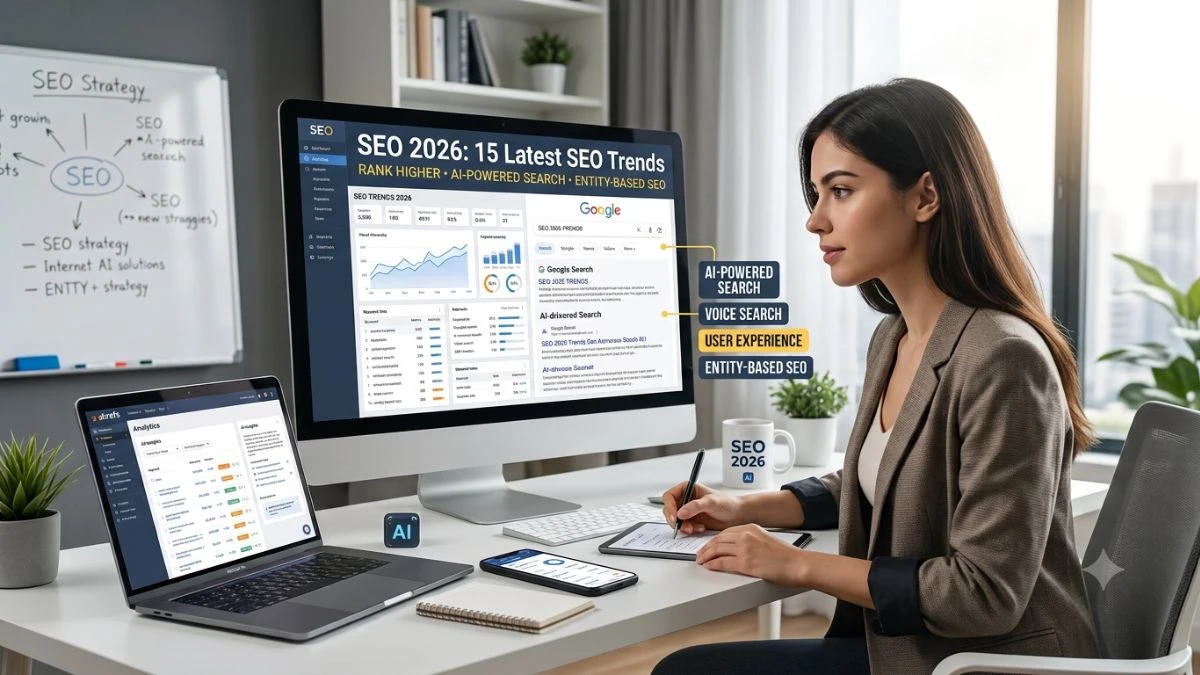
Search engine optimization is changing rapidly. A few years ago, many businesses focused mainly on keywords, backlinks, and publishing blog posts to improve their Google rankings. In 2026, SEO involves much more than these activities. People now use traditional Google Search, AI Overviews, AI Mode, ChatGPT, and other AI-powered platforms to discover information, compare services, research products, and find solutions to their problems. This change has created new opportunities for website owners, bloggers, digital marketers, and businesses. However, one important thing has not changed: people still need accurate, useful, trustworthy information. Google’s official 2026 guidance confirms that foundational SEO practices remain relevant for AI-powered search experiences. Websites should focus on valuable content, strong technical foundations, and satisfying user needs rather than relying on special AI ranking tricks. What Is SEO in 2026? Search Engine Optimization (SEO) is the process of improving a website’s content, technical structure, and overall usefulness so that search engines can discover, understand, and display its pages for relevant searches. In 2026, SEO also involves making information accessible and useful across AI-powered search experiences. For example, if someone searches for “best SEO agency for a small business,” Google may display traditional website results, AI-generated summaries, business listings, and other search features. A business can improve its visibility by creating relevant service pages, publishing useful information, maintaining accurate business details, and ensuring its website is technically accessible. SEO in 2026 includes several connected areas: The objective is not simply to get more visitors. It is to attract relevant users who can find answers, understand your services, and take meaningful action. 15 SEO Trends in 2026 You Need to Know 1. AI Search Optimization Is Becoming an Important Part of SEO Major trend AI-powered search is changing how people discover websites. Google AI Overviews and AI Mode can generate responses to complex questions and provide links to relevant websites. Users can explore topics through follow-up questions instead of performing several separate searches. For website owners, this creates another opportunity to reach people who are researching a topic. Google’s official AI optimization guidance explains that its generative search features rely on its existing Search systems to find relevant information and identify supporting pages. How to optimize your website for AI search Start with these practical steps: For example, if your target keyword is “What is technical SEO?”, begin with a short definition before explaining crawling, indexing, website speed, structured data, and other technical elements. This helps readers understand the topic quickly while making the page’s purpose clear to search engines. Important: There is no guaranteed method to appear in Google AI Overviews or AI Mode. Google says pages must meet its normal Search eligibility requirements, and indexing or display is never guaranteed. 2. Generative Engine Optimization (GEO) Is Gaining Attention Generative Engine Optimization, commonly known as GEO, refers to improving the chances that a brand or its content is discovered, referenced, or linked in AI-generated responses. Traditional SEO focuses on improving visibility in search engine results. GEO focuses more specifically on visibility within generative AI experiences. These approaches overlap significantly. For example, a digital marketing agency might publish a detailed guide about SEO pricing, explain different service packages, include real examples, and link to its relevant service pages. If someone asks an AI platform about SEO costs, that content may be useful as a source, depending on the platform’s retrieval systems and the user’s query. GEO strategies for 2026 Strategy How to implement it Clear information Explain concepts in direct, understandable language. Original research Publish genuine surveys, data, or case studies. Reliable references Support important claims with trustworthy sources. Brand consistency Keep business information accurate across platforms. Relevant coverage Address the main topic and closely related questions. Google’s 2026 guidance specifically recommends unique, valuable content rather than repeatedly publishing information already available elsewhere. It also warns against creating pages primarily to manipulate AI responses. GEO should therefore be treated as an extension of a useful SEO strategy, not as a replacement for it. 3. Answer Engine Optimization (AEO) and Direct Answers Answer Engine Optimization, or AEO, is the practice of organizing content so that users and answer-focused systems can easily understand the information being provided. People often search using complete questions, such as: AEO focuses on answering these questions clearly and accurately. How to optimize content for AEO Use the following structure: Question heading: What is SEO? Direct answer: SEO is the process of improving a website’s visibility in organic search results through useful content, technical improvements, and relevant authority signals. Detailed explanation: Explain how SEO works, why businesses use it, and which steps beginners should follow. Example: Show how optimizing a service page can help search engines understand what a business offers. This structure is helpful because readers can quickly find the answer and continue reading for more detail. Does AEO replace traditional SEO? No. AEO is a content and presentation approach that works alongside traditional SEO. Google states that special AEO or GEO techniques are not separate requirements for appearing in its AI search features. A well-optimized page should serve people first, whether they arrive from a traditional search result or an AI-powered experience. 4. Helpful, People-First Content Matters More Than Content Volume Publishing more articles does not automatically improve search rankings. A website with hundreds of short, repetitive articles may provide less value than a website with a smaller collection of detailed, original, and genuinely useful resources. In 2026, businesses should focus on creating content that solves actual problems rather than publishing articles only to target keywords. Google’s guidance emphasizes helpful, reliable, people-first content and warns against scaled content created primarily to manipulate search rankings. What makes content helpful? Useful content generally includes: For example, instead of publishing a generic article titled “SEO Tips,” create a guide explaining how a small business can conduct keyword research, optimize its homepage, improve local visibility, and measure results. Include examples of title tags, internal links, and content improvements. This gives readers something they can actually use. Should you use